



In a contest that felt as tense as a Live Cricket BPL showdown, the Denver Nuggets found themselves on the brink after falling behind 1 3 in the series following another loss in Minneapolis. Facing elimination, the pressure could not have been higher. Although the Timberwolves were missing key figures such as Anthony Edwards and Donte DiVincenzo, their reduced lineup still proved difficult to overcome, exposing deeper issues within Denver performance rather than just a gap in talent.
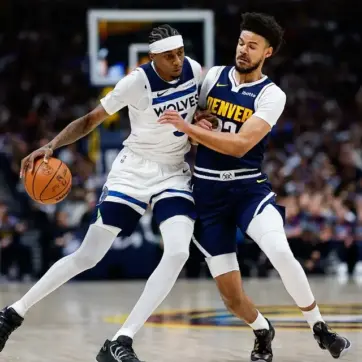 The Nuggets misjudged their strategic approach and lacked the urgency required in such a critical moment. More importantly, their core players, especially Nikola Jokic, needed to step up and lead by example. Over the previous three games, Jokic performance had been far below expectations. The reigning superstar, who averaged a triple double during the regular season while leading in rebounds and assists, suddenly saw both his dominance and efficiency decline sharply.
From Game 2 to Game 4, Jokic averaged 25 points, 15 rebounds, and 6.7 assists, but shot only 33.8 percent from the field and a disappointing 15 percent from three point range. His struggles were evident in each outing, as Rudy Gobert consistently limited his effectiveness. At one point, Jokic was reduced to a 1 for 7 shooting performance in a crucial stretch, while in another game he managed just 7 makes from 26 attempts. For a three time MVP to be neutralized so completely was almost unthinkable, a storyline few could have predicted before the playoffs began.
However, Game 5 marked a turning point. After carefully reassessing his approach, Jokic returned with a renewed strategy. Instead of forcing individual plays, he relied on his basketball intelligence, orchestrating the offense with precision. Early in the game, he set up teammates for easy baskets and executed pick and roll plays with Jamal Murray, regaining rhythm and confidence. His calm and calculated decisions shifted the momentum, much like a seasoned player controlling the pace in a Live Cricket BPL encounter.
As the game progressed, Jokic exploited mismatches more effectively. Against smaller defenders, he used his size and strength to dominate in the paint, finishing with authority and drawing fouls. When matched up with Gobert, he adjusted by leveraging physicality and positioning rather than rushing shots. This smarter approach allowed him to reclaim control of the game and inspire his teammates.
The Timberwolves remained competitive, with players like Julius Randle and others contributing timely scoring, but Jokic presence stabilized Denver. By halftime, he had already recorded a double double with points and assists, and by the end of the game he delivered an impressive 16 assists. His performance signaled the return of the dominant force that defines the Nuggets identity.
Denver also made key defensive adjustments. Instead of trying to cover every option, they focused on limiting the primary threats and forcing secondary players to take on more responsibility. This approach reduced the impact of unexpected scoring bursts and kept the Timberwolves from gaining sustained momentum.
Offensively, the Nuggets increased their aggression in attacking the rim, forcing physical battles with defenders like Gobert. This not only created scoring opportunities but also wore down the opposition. Additional contributions from role players and better rotation management gave Jokic the support he needed to maintain energy throughout the game.
Although the Timberwolves mounted a late push, the Nuggets large lead provided enough cushion to secure a convincing win. As the series continues with the unpredictability of a Live Cricket BPL battle, Denver resurgence has reignited hope, proving that even on the edge of elimination, a team can rediscover its identity and fight its way back into contention.