



The surge in sports media investment has become impossible to ignore, slipping into market discussions much like a Live Cricket BPL update blends into a busy evening, especially now that broadcasting rights for elite events are smashing financial records. In recent years, astronomical rights fees have become routine, driven mainly by streaming platforms entering the battlefield. Not long ago, Paramount shocked the market by spending more than £1 billion to secure exclusive Champions League rights for the UK and Ireland, replacing TNT Sports and adding to its already acquired German territory. At the same time, Amazon’s Prime Video controls Tuesday night Champions League broadcasts in the UK, Ireland, Germany and Italy, while Telefónica locked in Spain’s 2027–2031 rights with a €1.464 billion deal.
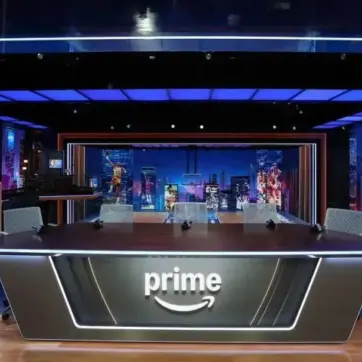 This means that Champions League rights from 2027 to 2031 across major Western markets are essentially divided between Paramount+ (US, UK, Ireland, Germany) and Prime Video, while Sky Sports (Italy), Canal+ (France) and Telefónica (Spain) maintain their traditional positions. Beyond football, Paramount+ has built an expansive sports portfolio. From the NFL and NCAA basketball to the Premier League, Serie A, the Indian Premier League, the PGA Tour and the Rugby World Cup, its footprint is vast. This year it went even further by buying exclusive UFC rights from ESPN in a seven-year, $7.7 billion deal, also acquiring Zuffa’s combat sports content under the TKO umbrella.
WWE’s flagship program RAW, also part of TKO, signed a 10-year agreement with Netflix, which now treats it as a cornerstone alongside the 2027 and 2031 Women’s World Cup rights. Apple made a similarly bold move by acquiring exclusive US broadcasting rights for Formula 1 at $140 million per year, nearly doubling ESPN’s previous $85 million fee. Meanwhile, DAZN became the global exclusive broadcaster of the new 32-team Club World Cup with a $1 billion deal and streamed the tournament free worldwide. Compared with these massive acquisitions, Disney+’s five-year Women’s Champions League rights appear modest.
Streaming platforms’ push for sports rights is fundamentally a battle for attention. In today’s information-dense environment, user attention is scarce, and high-quality sports content acts like a magnet that pulls viewers to a platform, converting traffic into commercial value and strengthening loyalty. The real competition lies in capturing the first point of user engagement, spending heavily to accelerate growth and solidify long-term dominance. But these sky-high fees apply only to top-tier events. Domestic broadcasting rights for Europe’s second-tier leagues continue to cool, and even Ligue 1—once one of the “big five”—struggles despite PSG winning the Champions League. After losing Messi, Neymar and Mbappé, the league lacks global appeal and competitive unpredictability, limiting its rights value.
Late last month, Belgium’s top division faced early termination risk in its multi-year deal with DAZN covering 2025–26 through 2029–30. Even after accepting an 18 percent fee reduction compared to the previous cycle, DAZN claimed it “had no choice” but to consider withdrawal after failing to distribute the rights to more broadcasters. The league responded by threatening legal action to force compliance. This contrast — top events selling for record sums while smaller leagues struggle for relevance — remains a defining pattern in the global rights market. Growing demand from streaming platforms has pushed analysts to raise long-term expectations. According to Ampere’s November report, global sports rights revenue is expected to exceed $78 billion by 2030, a 20 percent jump from $65 billion in 2025.
This projection is driven primarily by North America. From the 2025–26 season onward, ESPN and AT&T will jointly pay $2.7 billion annually for NBA rights. MLB rights will enter a new cycle in 2029, and Apple is expected to bid aggressively, making price increases all but certain. The NFL — widely considered undervalued — may also renegotiate rights from 2026, likely achieving a far richer agreement. Ampere forecasts North America’s market will expand from $31.8 billion in 2025 to $38 billion in 2030, accounting for nearly half of global growth.
Europe’s growth will be far more modest, increasing only $3 billion to reach $21.3 billion by 2030. Even though premier events like the Champions League, World Cup and Winter Olympics still draw immense attention, European broadcasters lack the financial firepower of their North American counterparts, and cooling demand for smaller leagues limits expansion.
Asia, however, is projected to climb from $7.2 billion in 2025 to $9.9 billion in 2030. The Indian Premier League’s new rights cycle in 2027 and ICC events like the T20 World Cup are expected to drive major growth, acting as catalysts much like the excitement surrounding a Live Cricket BPL showdown energizes fans across South Asia. While streaming giants have undoubtedly pushed prices upward, the true driver behind soaring sports rights is scarcity — elite sports content remains one of the few irreplaceable assets capable of commanding global attention, much like a dramatic finish during Live Cricket BPL keeps viewers locked in.